The global manufacturing landscape is undergoing a massive reconfiguration. As companies move away from over-reliance on Asian supply chains, Nearshoring in Mexico has emerged as the premier strategy for North American market dominance.
However, entering a foreign market involves navigating a labyrinth of labor laws, tax regulations, and international trade treaties like the USMCA.
For many Fortune 500 companies and growing SMEs, the solution is the Shelter Company model. But what exactly does a shelter company do, and why is it considered the gold standard for foreign investment in Mexico?
1. Defining the Shelter Company Model in Mexico
A Shelter Company is a legal entity in Mexico that allows a foreign manufacturer to operate in the country without technically being the "employer of record" or the primary legal entity. Essentially, the shelter company provides the legal and administrative framework, while the foreign company provides the production equipment, raw materials, and technical know-how.
The "Legal Umbrella" Concept
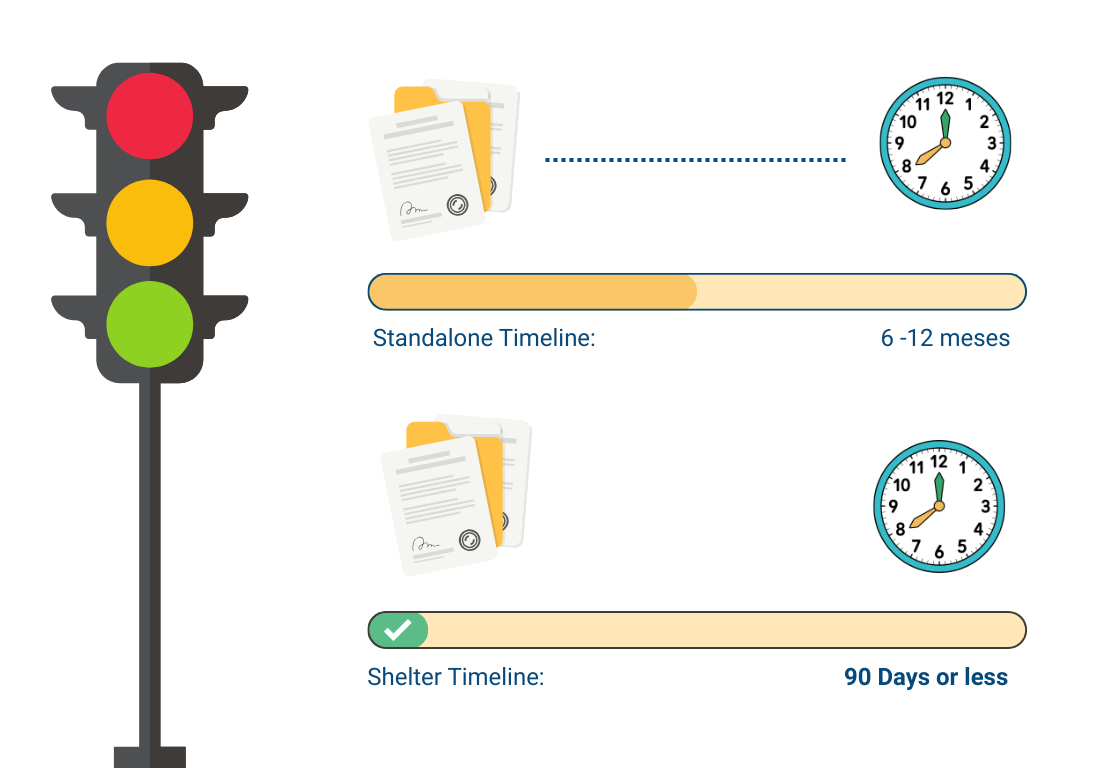
Think of a shelter company as a protective umbrella. Under this model, the foreign firm (the client) operates as a department of the shelter company. This means the client does not have to deal with the 6 to 12 months of red tape required to incorporate a Mexican subsidiary.
2. The Core Functions: What Does a Shelter Company Actually Do?
A shelter company like Co-Production International (CPI) handles the non-core, administrative functions of the business. This allows the investor to focus 100% on manufacturing quality and production efficiency.
A. Human Resources and Labor Relations
Mexican labor law is significantly different from U.S. or European law. A shelter company manages:
- Recruitment and Retention: Finding skilled labor in competitive hubs like Tijuana, Monterrey, or Queretaro.
- Payroll and Benefits: Ensuring all mandatory "prestaciones" (benefits) like Aguinaldo, PTU (Profit Sharing), and IMSS (Social Security) are paid correctly.
- Union Negotiations: Managing relationships with local unions to prevent disruptions.
B. Customs and Trade Compliance (IMMEX Program)
One of the biggest financial advantages of a shelter is the IMMEX program.
C. Accounting, Tax, and Fiscal Management
- Navigating the Mexican Tax Administration Service (SAT) is notoriously complex.
- Shelter Tax Status: Most shelter providers have a special tax status that simplifies the "Permanent Establishment" risk for foreign firms.
- Invoicing and Audits: Handling all local tax filings and ensuring the operation remains in "Good Standing" with federal authorities.
D. Real Estate and Facilities Management
From finding the right industrial park to managing utility contracts (electricity, water, high-speed internet), the shelter provider acts as your local boots-on-the-ground.
3. Why It Matters for Foreign Investors: The Top 5 Benefits
If you are an investor looking at Mexico in 2026, the shelter model is not just a service; it is a competitive advantage.
1. Rapid Speed to Market
Setting up a standalone corporation (S.A. de C.V.) involves months of bureaucratic hurdles. A shelter company already has the licenses, the bank accounts, and the tax IDs.
- Standalone Timeline: 6–12 months.
- Shelter Timeline: 90 days or less.
2. Drastic Risk Reduction
Because the shelter company is the legal entity, it assumes the primary liability for labor disputes, environmental compliance, and fiscal audits. For a foreign CFO, this "risk transfer" is often the deciding factor in choosing a shelter over a standalone operation.
3. Lower Operational Costs
By leveraging the "Economies of Scale" of a shelter provider, small and medium-sized plants can access the same administrative expertise and software (ERP/Customs) that only large corporations could afford. You pay for a fraction of an expert team rather than hiring five full-time specialized managers.
4. Specialized Knowledge of Local Ecosystems
Mexico’s industrial landscape is highly regionalized. A shelter provider knows exactly which city has the best talent for Aerospace vs. Medical Devices. They understand the local "hidden" costs and the best logistical routes to the U.S. border.
5. Focus on Core Competencies
Manufacturing is hard enough. Dealing with Mexican electricity permits or payroll taxes shouldn't be your headache. The shelter model allows your plant manager to focus on parts-per-million (PPM) and throughput, not bureaucracy.
4. Shelter vs. Standalone: Which is Right for You?
While the shelter model is ideal for many, it is important to compare it with other entry strategies:
| Feature |
Shelter Model |
Standalone (Subsidiary) |
| Startup Time |
3-4 Months |
9-12 Months |
| Legal Liability |
Held by Shelter Provider |
Held by Foreign Parent Co. |
| VAT/Tax Savings |
Immediate (via Shelter's IMMEX) |
Requires lengthy certification process |
| Administrative Control |
Managed by Experts |
Internalized (Higher Overhead) |
| Production Control |
100% Client Controlled |
100% Client Controlled |
5. Strategic Considerations for 2026: The USMCA Review
As we approach the 2026 USMCA review, trade compliance is becoming more rigorous. The "Tariff Effect" and increased scrutiny on labor standards mean that "winging it" in Mexico is no longer an option. A shelter company provides a layer of expert oversight that ensures your operation stays compliant with evolving international treaties, protecting your duty-free access to the U.S. market.
Conclusion: Securing Your Manufacturing Future in Mexico
The question for foreign investors is no longer if they should be in Mexico, but how they will get there. The Shelter Company model remains the most efficient, low-risk, and cost-effective way to launch a manufacturing operation.
By partnering with an experienced provider like Co-Production International, you gain more than an administrator—you gain a strategic partner dedicated to navigating the complexities of Mexico, so you can focus on building the products of the future.


.jpg)
.png)
 USA Corporate Office
 México Corporate Office
 Monterrey Nuevo León Office